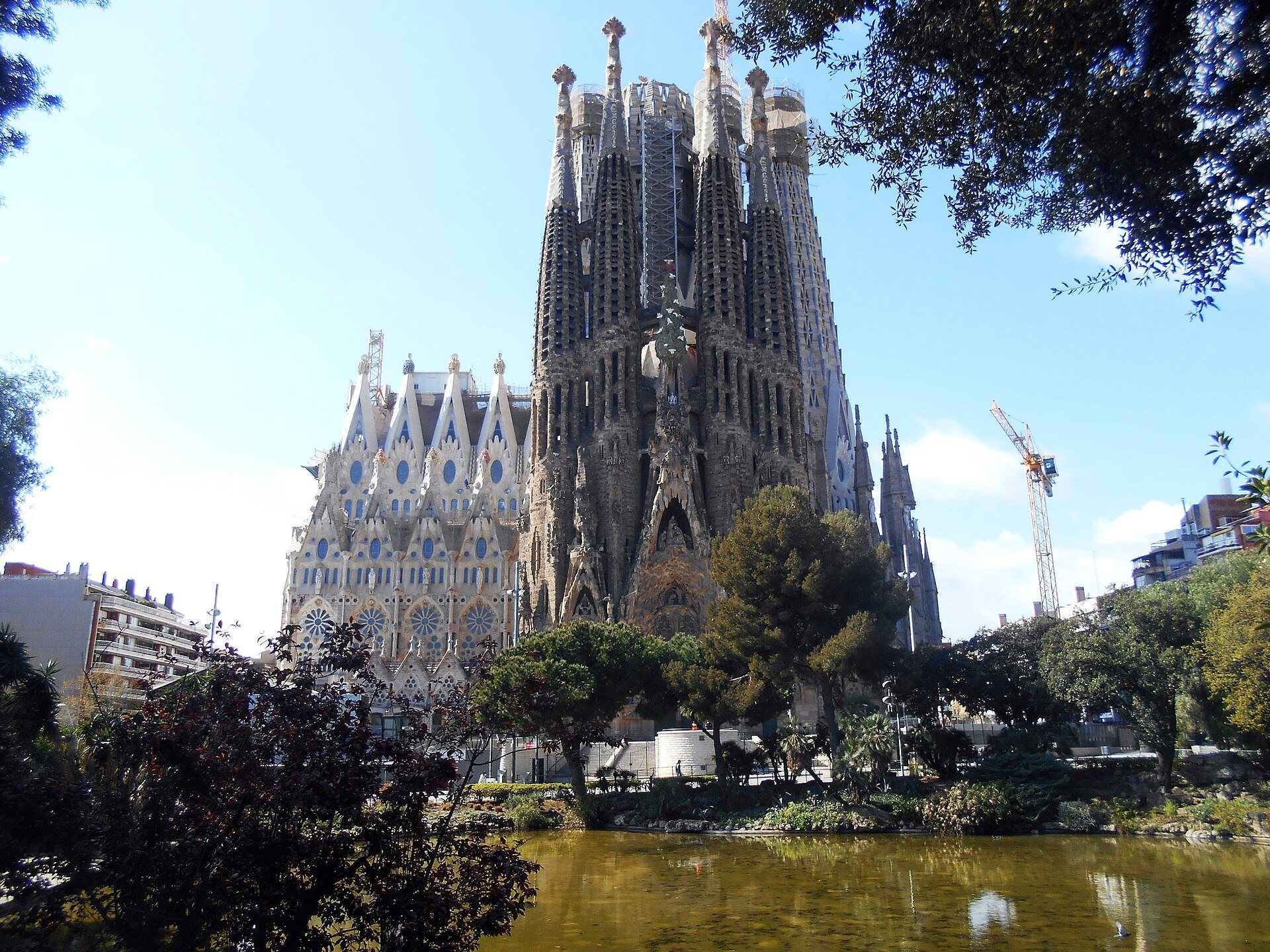
A city drawn twice
A hill, a plain and a sea
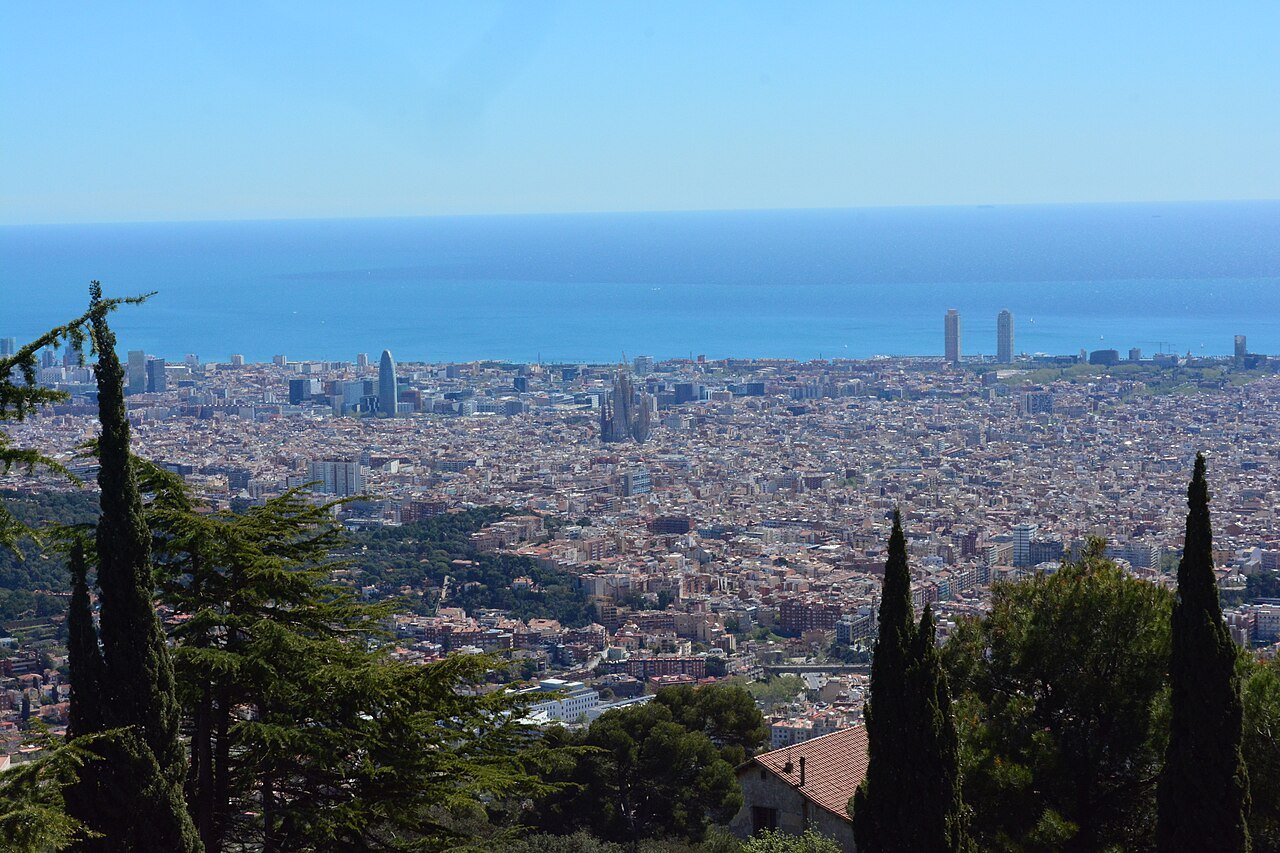
Barcelona is the capital of Catalonia and the second-most populous municipality in Spain, on the northeast coast of the Iberian Peninsula between the mouths of the Llobregat and the Besòs, with the Serra de Collserola behind it and the Mediterranean in front. It is divided into ten districts, and about 1,700,000 people live inside its limits. Its old core stands on a small hill where the Romans laid out a camp in about 15 BC, and the Plaça de Sant Jaume is roughly where their forum was (the sights). The airport, the two main stations and the port bring you in (getting here), and the metro, the trams and the funiculars carry you around (getting around). Each district suits a different stay (where to stay).
The grid and the colored stone
When the city walls came down, the engineer Ildefons Cerdà planned the extension that Barcelona calls the Eixample: long straight streets in a strict grid, with square blocks whose corners are chamfered so that the streets widen at every intersection. Along it rose the buildings of Catalan Modernisme, among them the houses and the basilica of Antoni Gaudí, whose works are a UNESCO World Heritage Site (Gaudí and Modernisme). Past the old port the city meets its beaches (the beaches), and the towns that Barcelona is a day away from are for day trips.
A warm climate and a few tickets
Barcelona has a hot-summer Mediterranean climate, with mild winters and autumn as the rainiest season (when to come). Much of what visitors come for needs a ticket bought ahead (booking ahead sorts out which), while the old streets, the beaches and the market are free to walk into. The city eats at markets, at the bar and at the table (eating and drinking), and there is an itinerary for every length of stay.
Gaudí and the Modernistes
The old city
The park and the tower
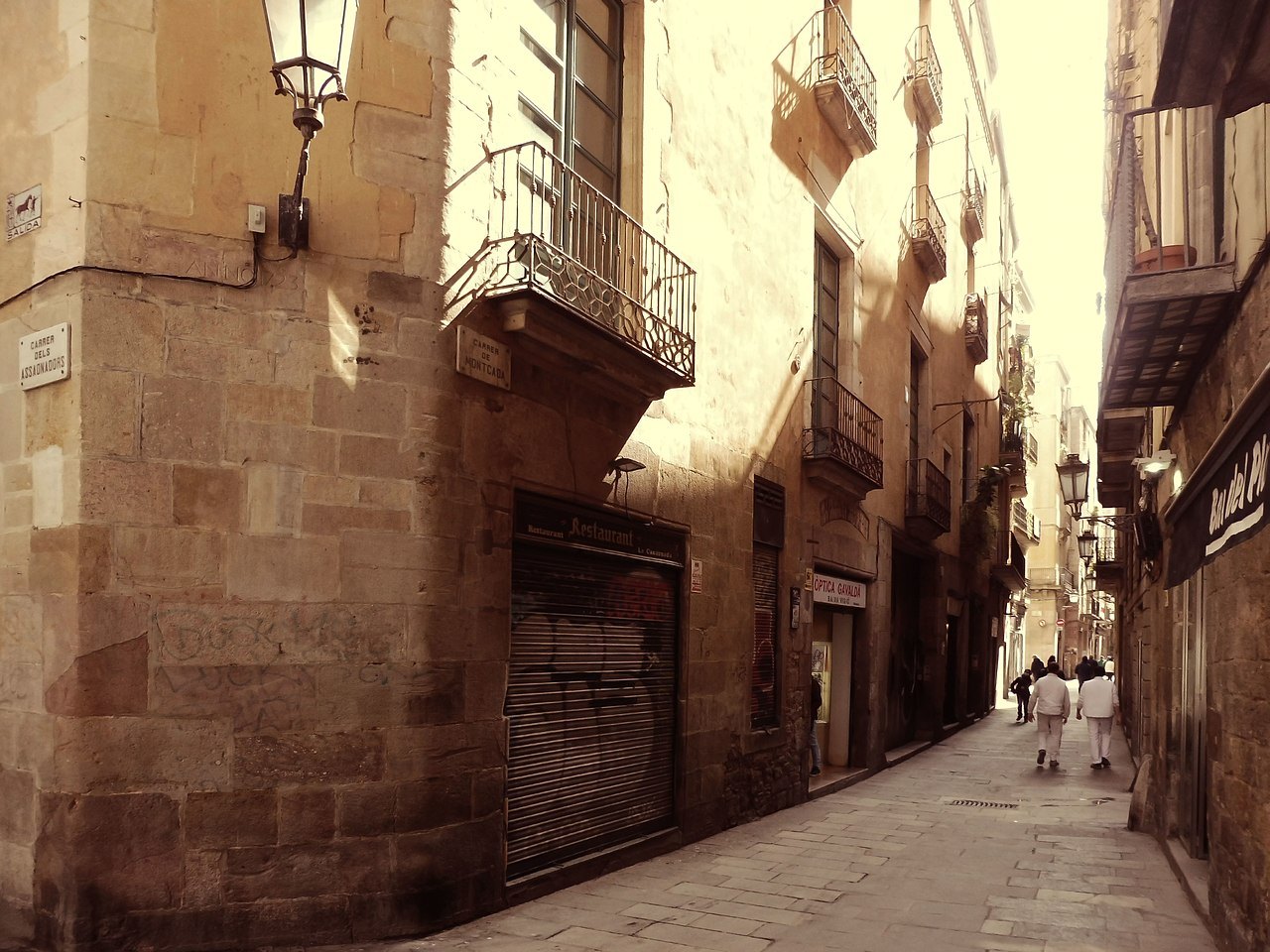
Schematic, north at the top: the street grid drawn from real coordinates, the Eixample's chamfered blocks in the middle, the harbor and the sea to the south-east. Each numbered octagon is a sight; the dashed line is the walk below.
A walk from the grid to the sea
From Casa Milà on the Passeig de Gràcia, down past Casa Batlló to La Rambla, through the market and the Palau Güell to the harbor: six stops, always downhill.
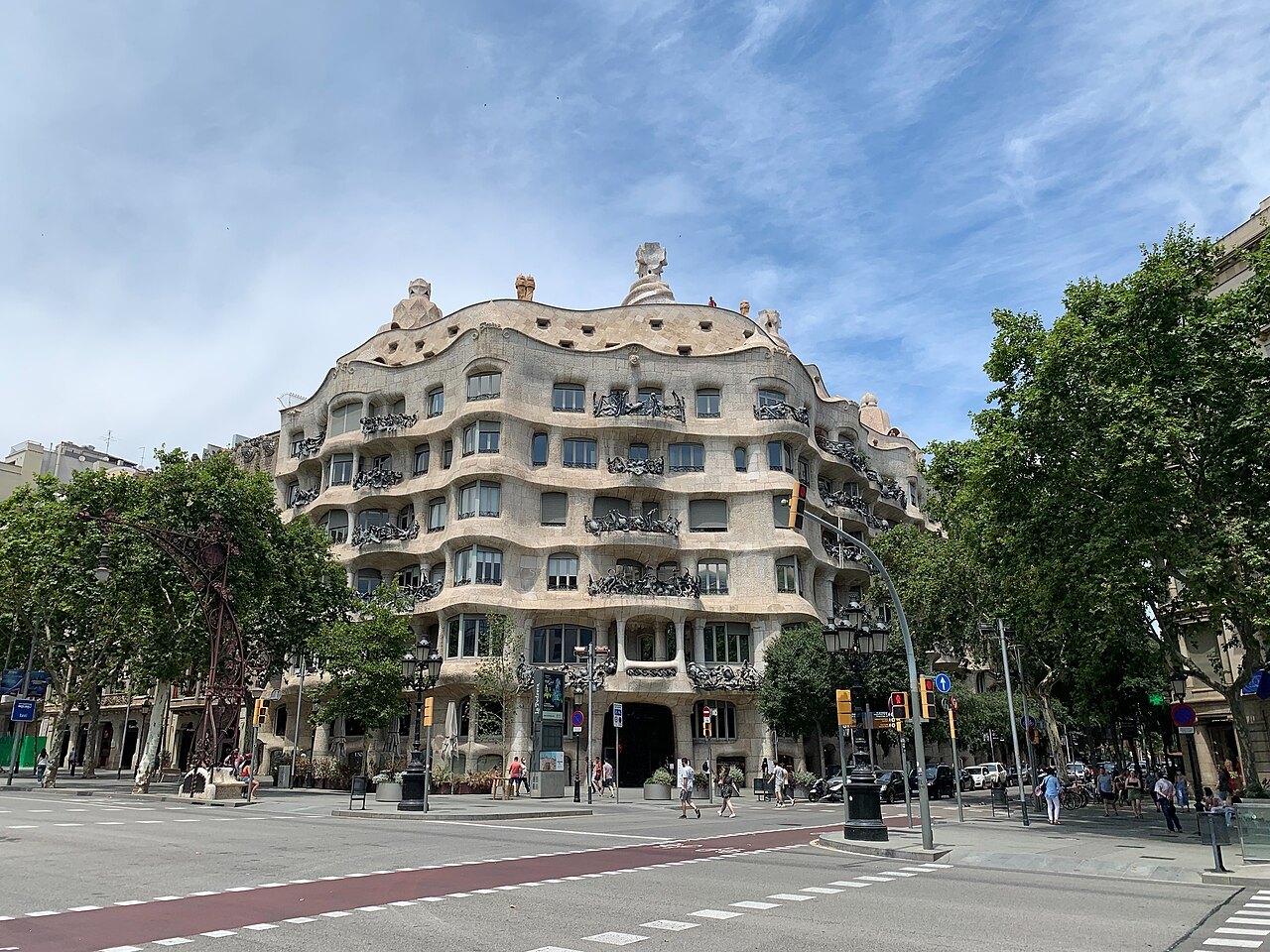
Casa Milà's wave-like stone façade across the Passeig de Gràcia, with plane trees on both sides.Robot8A, Wikimedia Commons, CC BY-SA 4.0 The stone quarry on the avenue
Start on the Passeig de Gràcia at Casa Milà, popularly called La Pedrera, "the stone quarry". It was the last private residence Gaudí designed, built between 1906 and 1912, and its undulating façade of stone supports itself.
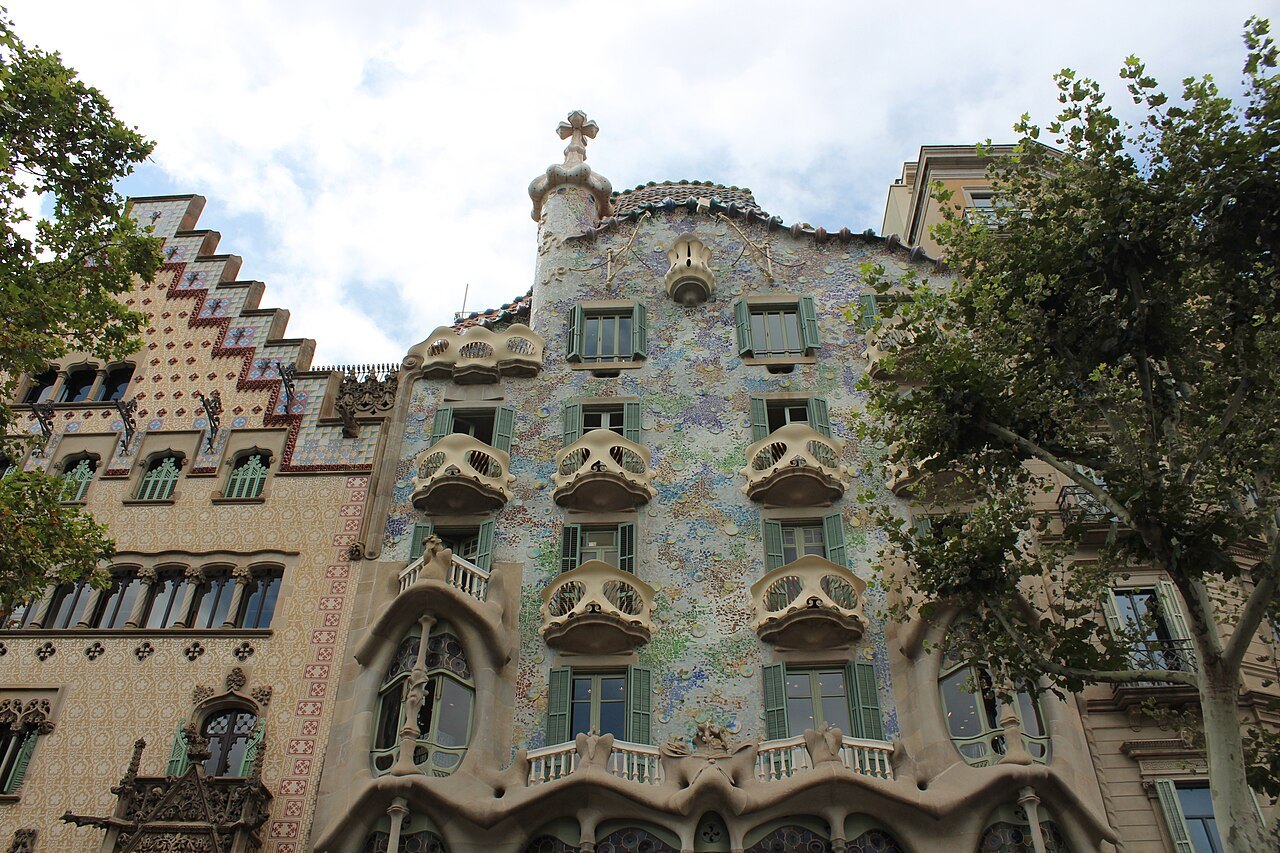
Casa Batlló's mosaic façade, with the stepped gable of Casa Amatller at its side.Gargarapalvin, Wikimedia Commons, CC BY-SA 4.0 The house of broken tiles
A few blocks down stands Casa Batlló, which Gaudí redesigned in 1904. It is one of four strikingly different Modernista houses on the Illa de la Discòrdia, the "Block of Discord", and its façade is covered in trencadís, a mosaic of broken ceramic tiles.
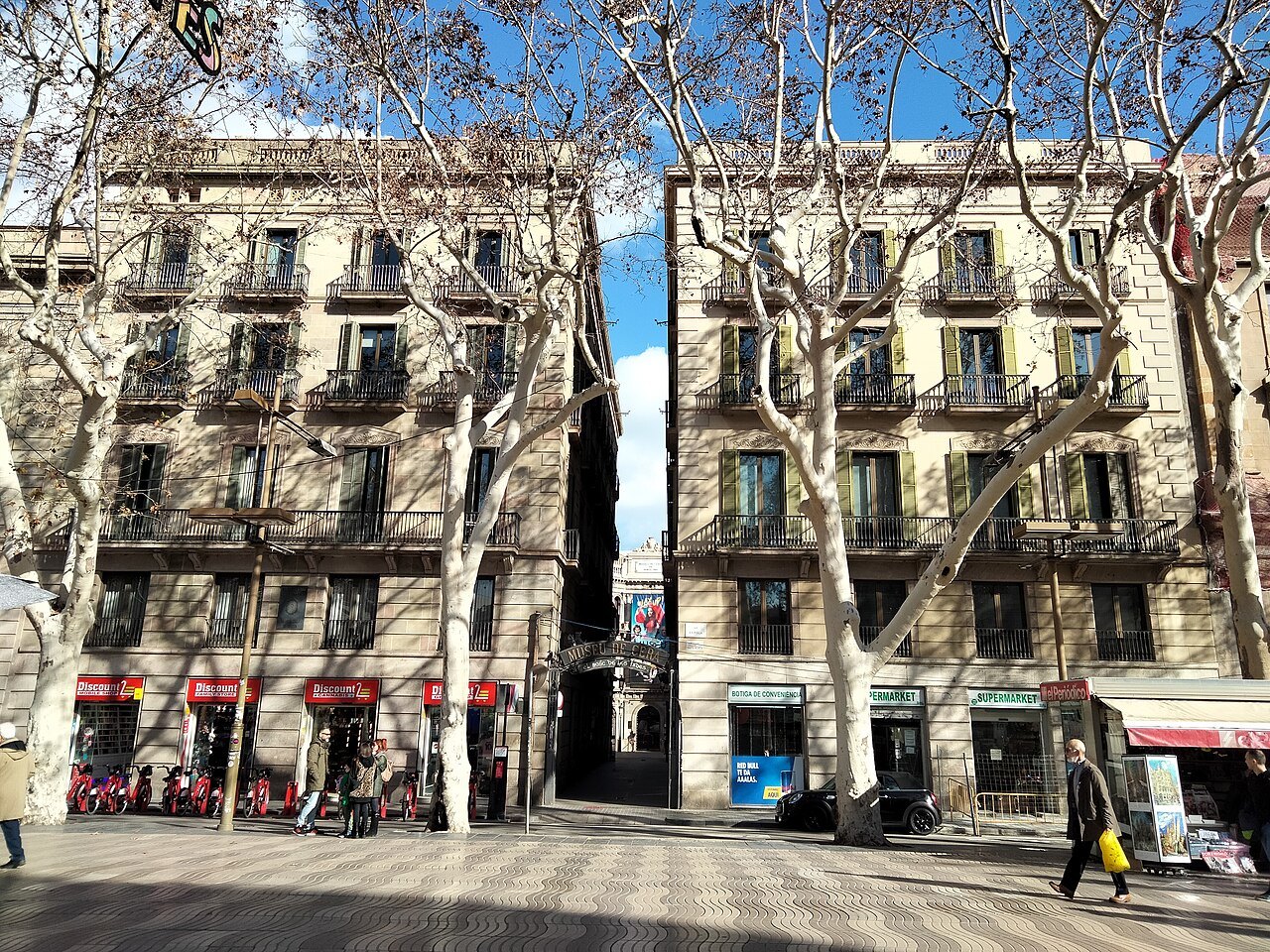
Plane trees and apartment blocks on the Rambla, with a narrow passage between two buildings.Enric, Wikimedia Commons, CC BY-SA 4.0 The street that runs to the sea
From the Plaça de Catalunya, La Rambla runs three-quarters of a mile to the harbor, a tree-lined pedestrian street between the Gothic Quarter and El Raval. The poet Federico García Lorca called it the only street in the world that he wished would never end.
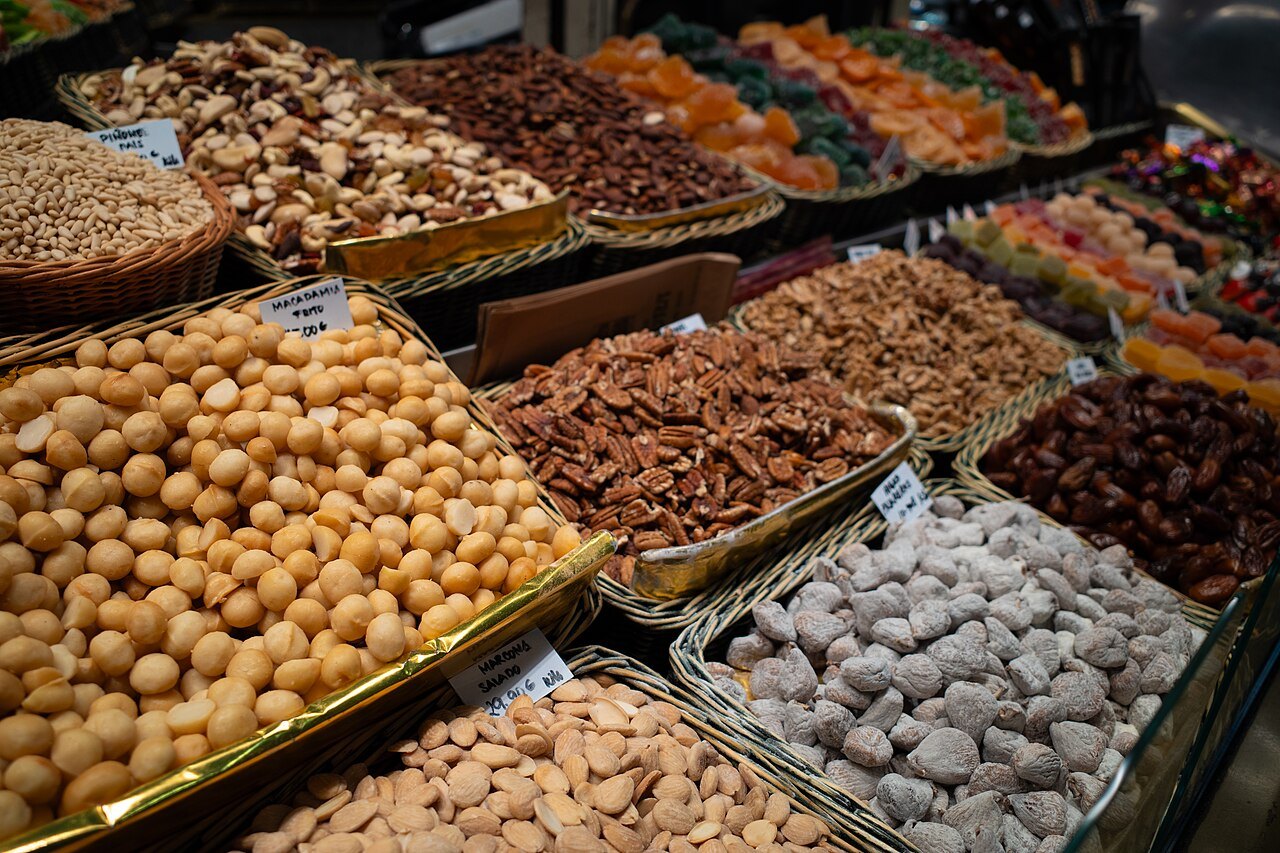
Baskets of nuts and dried fruit on a stall in the Boqueria.Nan Palmero, Wikimedia Commons, CC BY 2.0 The market off the street
Halfway down, an entrance opens on La Boqueria, a large public market. The first mention of a market here dates from 1217, when tables were set up near the old city gate to sell meat.
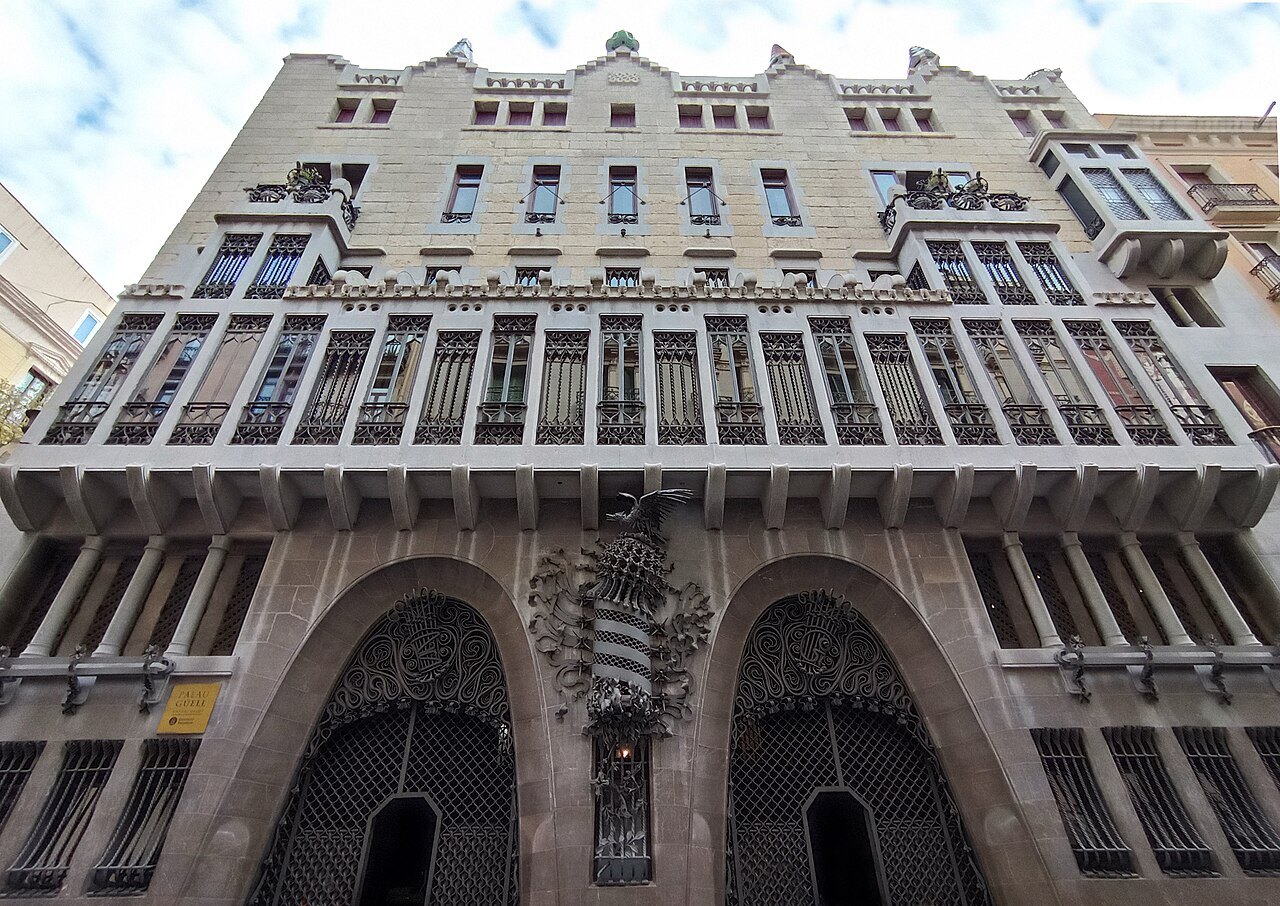
The façade of the Palau Güell seen from below, with arched doorways under a carved gallery.Canaan, Wikimedia Commons, CC BY-SA 4.0 The palace in the Raval
Turn into the Carrer Nou de la Rambla for the Palau Güell, the mansion Gaudí designed for Eusebi Güell and built between 1886 and 1888. Its iron entrance gates have a parabolic arch.
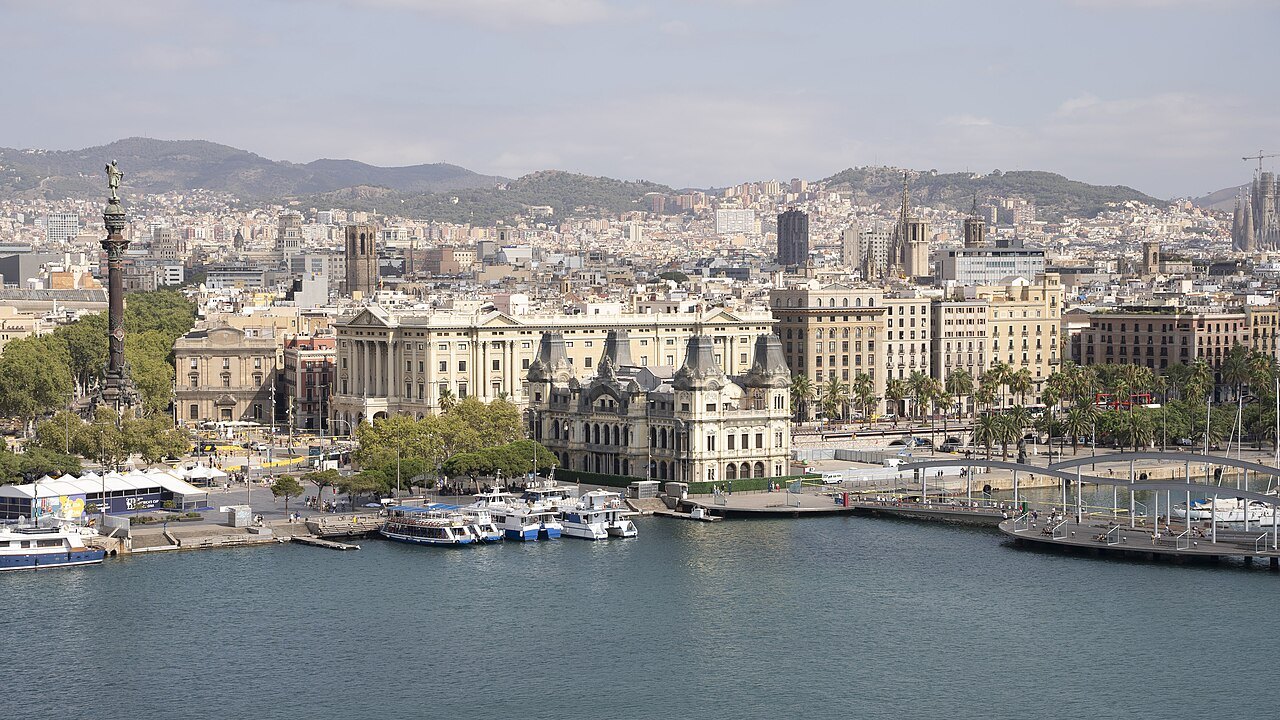
The Port Vell and the Columbus Monument, with the city rising to the hills behind.NeusCGarcia, Wikimedia Commons, CC0 The harbor and the column
End at the Columbus Monument, where La Rambla meets Port Vell, the old harbor, which was rebuilt before the 1992 Olympics. A pedestrian walkway, the Rambla de Mar, connects La Rambla to the port.
Three things to know first
- ArrivingAn airport with more than 50 million passengers a year.Barcelona–El Prat Airport handles over 50 million passengers a year. The Port of Barcelona is the busiest passenger port in Europe, and a high-speed rail line links the city with France and the rest of Europe.Getting here →
- The streetsA metro on three track gauges.The metro runs 12 lines, operated by two companies, and is one of only two metros in the world to run on three different track gauges. The first rapid transit railway in the city was founded in 1863.Getting around →
- The calendarMild winters, hot summers, rain in autumn.Barcelona has a hot-summer Mediterranean climate: mild winters, warm to hot summers and autumn as the rainiest season, with about two thousand five hundred hours of sunshine a year. The city last recorded a temperature below freezing on 27 January 2005.When to come →
Spain · Catalonia · Province of BarcelonaAbout 1,700,000 people in the cityCatalan and SpanishEuroA Roman camp in about 15 BCTen districts
The parts of this guide
- 01Twenty places, one page eachThe SightsFrom the Sagrada Família to the Port Vell, by way of Gaudí's houses, the Gothic Quarter and Montjuïc: what each one is, what you see there, and where it stands.
- 02The movement behind the colored stoneGaudí and ModernismeCatalan Modernisme, the architects behind it, and how Gaudí's buildings sit beside those of Domènech i Montaner and Puig i Cadafalch, with the houses that have no page of their own.
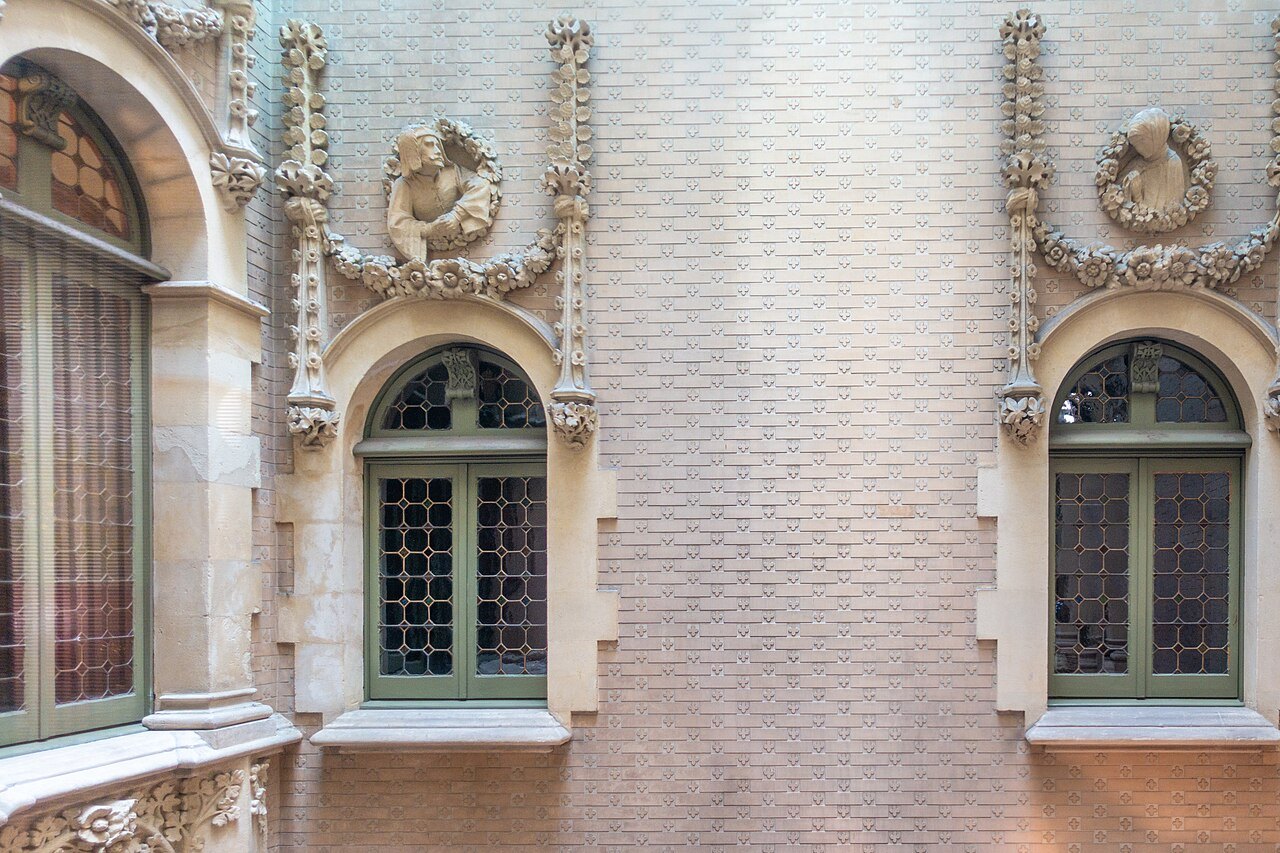
- 03An airport, two main stations and a portGetting HereBarcelona–El Prat Airport, the railway stations at Sants and França, the coach station and the cruise terminals — which to use and how each reaches the center.
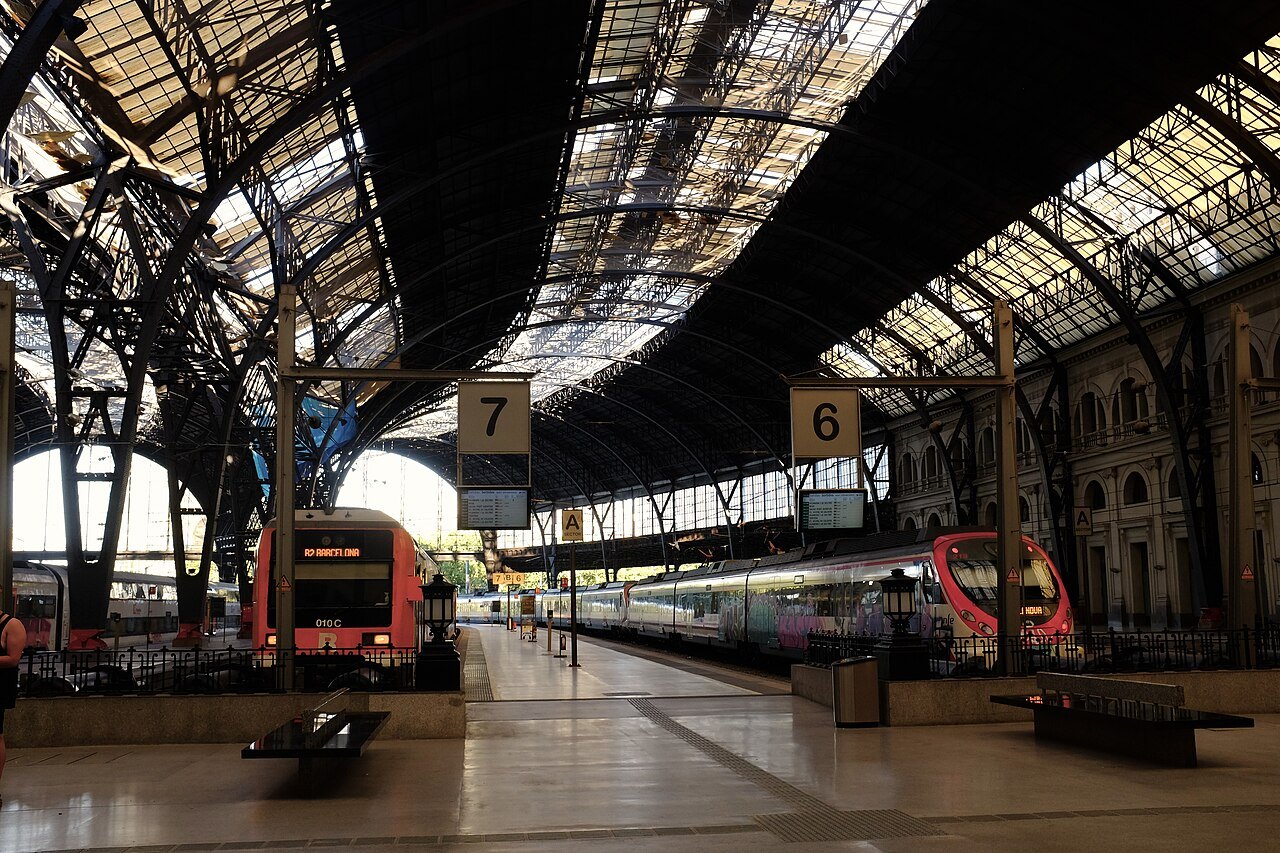
- 04The metro, trams, buses, bikes and your own feetGetting AroundA metro run by two companies, trams, buses and the bike-share system, the lifts and funiculars up the hills, and the streets that are best on foot.
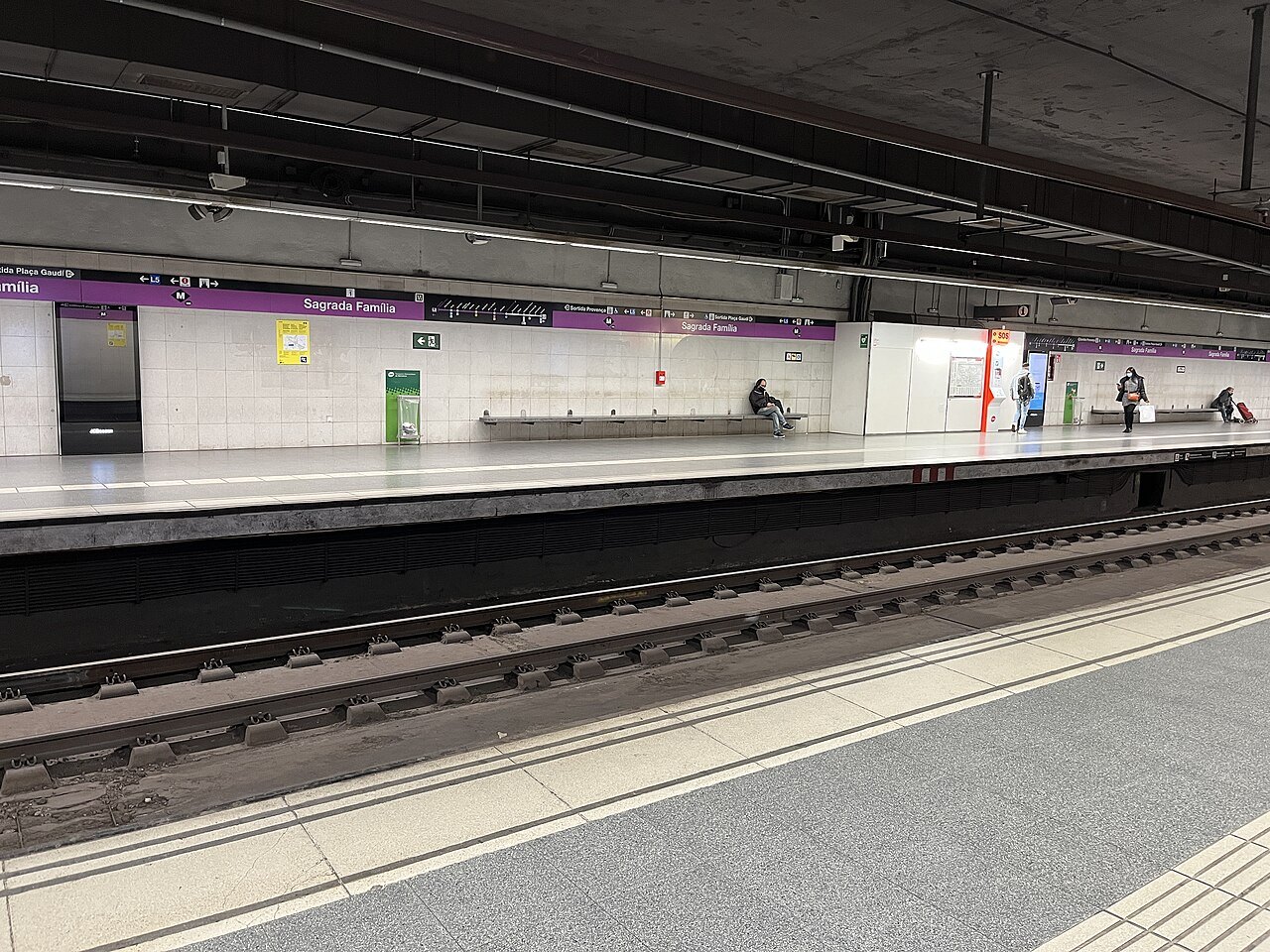
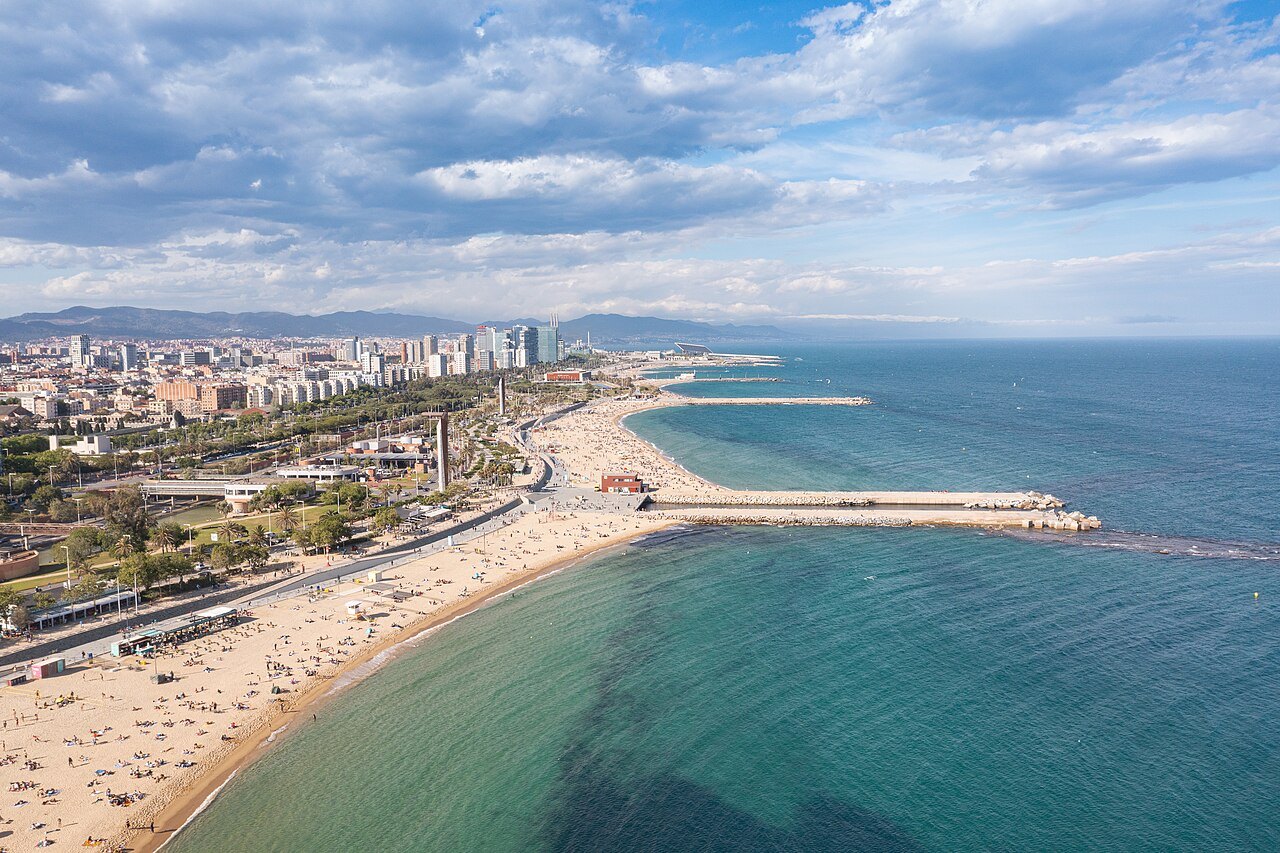
- 05Seven beaches along the city's shoreThe BeachesLa Barceloneta and the beaches that run northeast from it, the Olympic port and the Fòrum, and how the sea shapes the city's year.
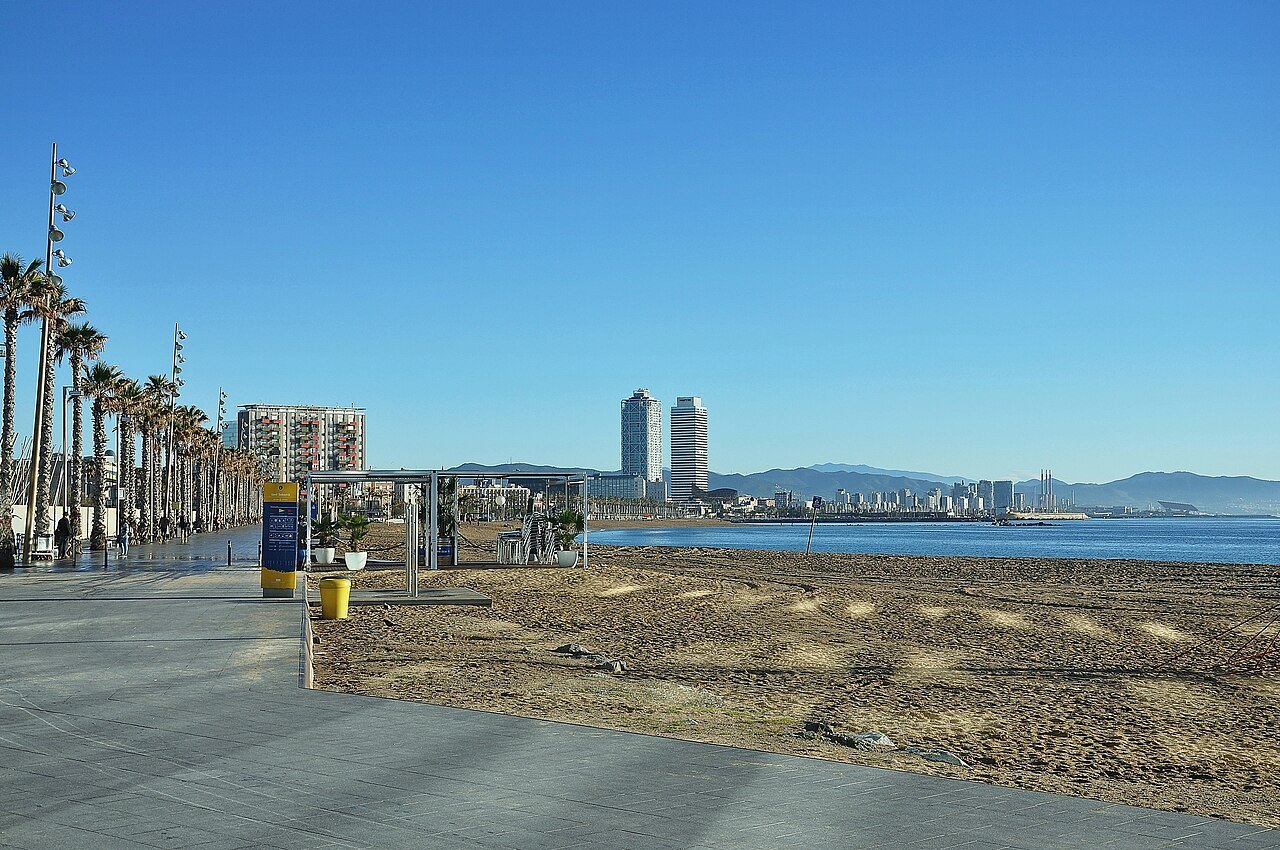
- 06Basilicas, houses and a hill-top parkBooking AheadWhat genuinely needs a ticket in advance — Gaudí's houses, the Sagrada Família, Park Güell, the Palau de la Música — and what never does.
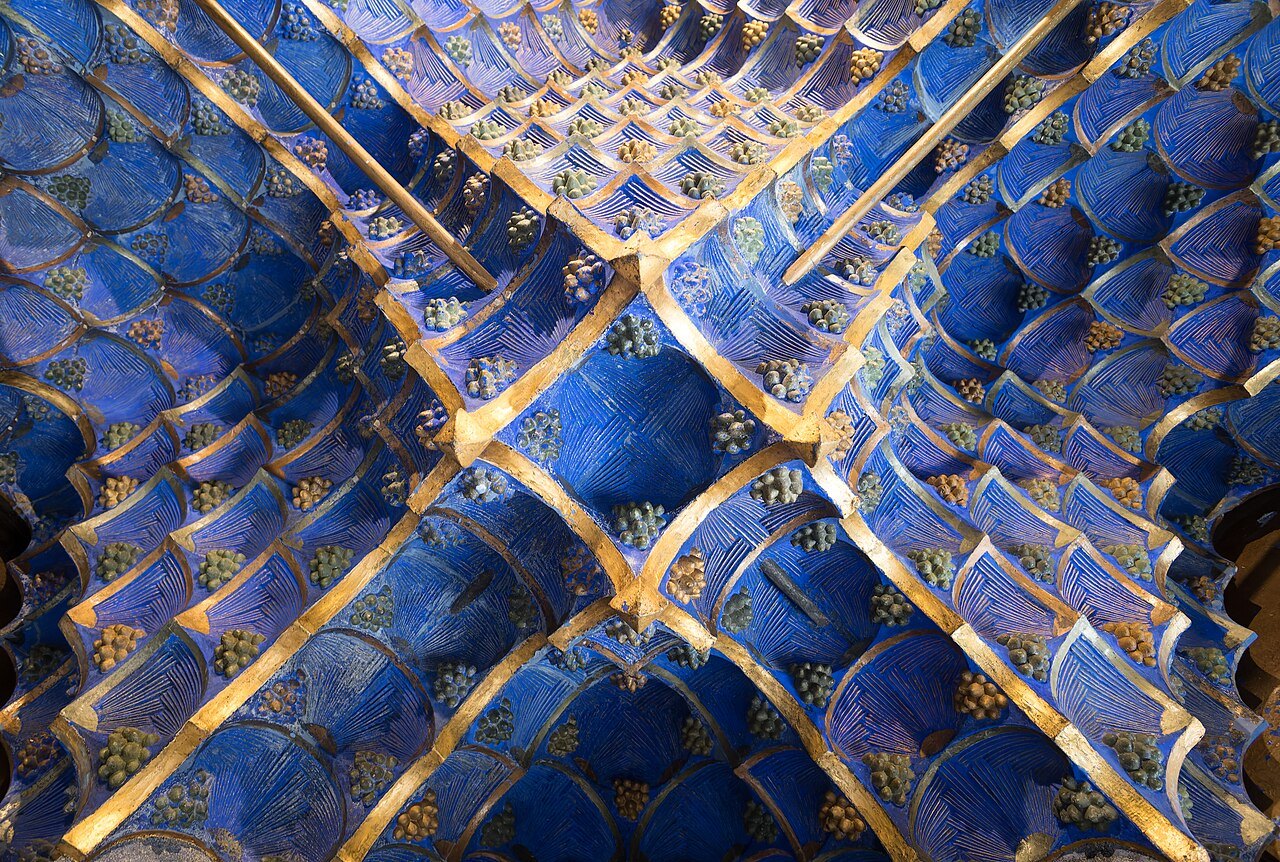
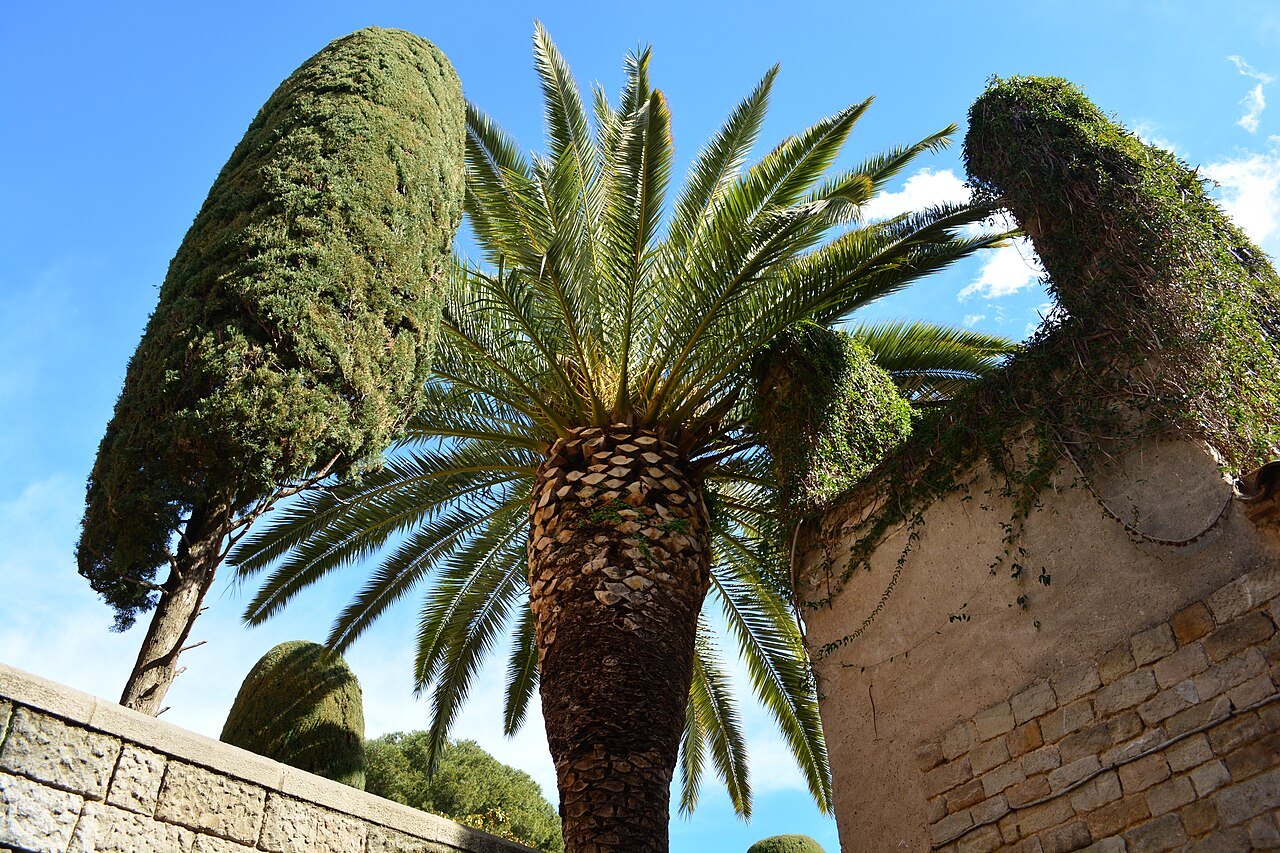
- 07Mild winters, hot summers, rain in autumnWhen to ComeA hot-summer Mediterranean climate, season by season, with the festivals and the quieter weeks.
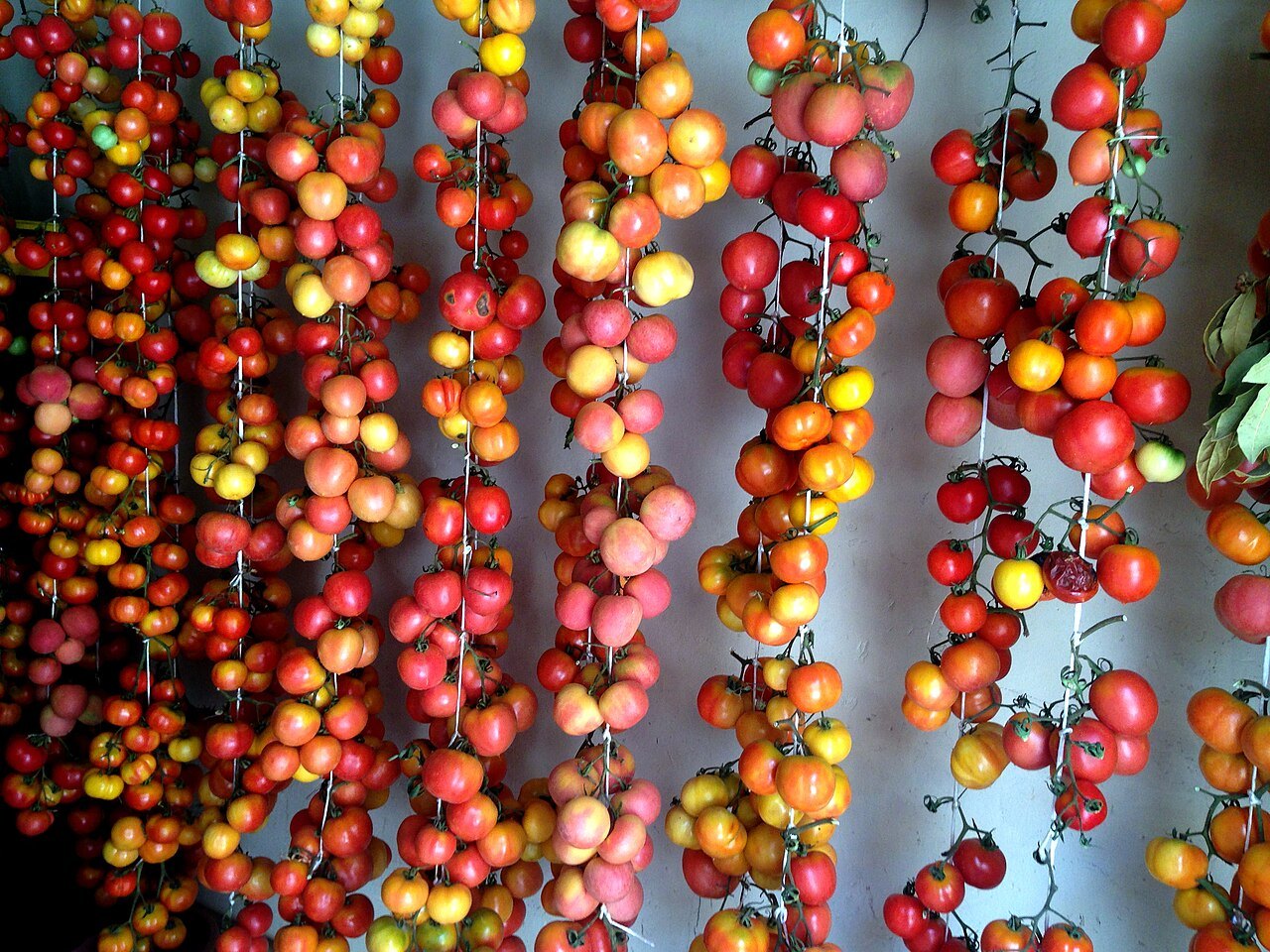
- 08Tapas, markets, calçots and crema catalanaEating & DrinkingThe city's own plates and how Barcelona eats — a market off La Rambla, a vermouth hour, a plate of pa amb tomàquet.
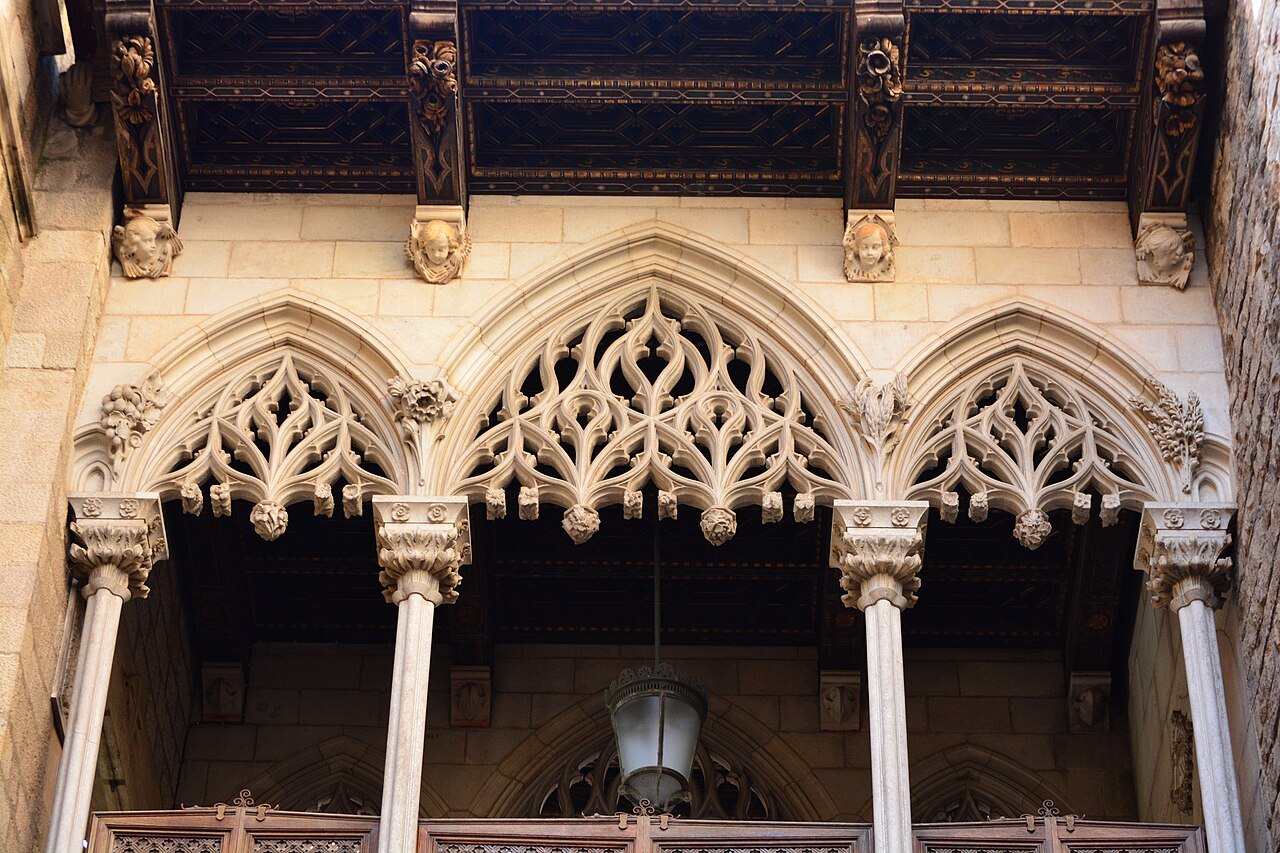
- 09The Eixample, the old city, Gràcia and the seaWhere to StayThe Eixample and Gràcia, the Gothic Quarter, El Born and El Raval, Barceloneta and beyond — who each suits and how far it is from the sights, drawn on a map.
- 10One day, two, three, fiveItinerariesRoutes by the length of your stay, built around Gaudí, the old city and the sea.
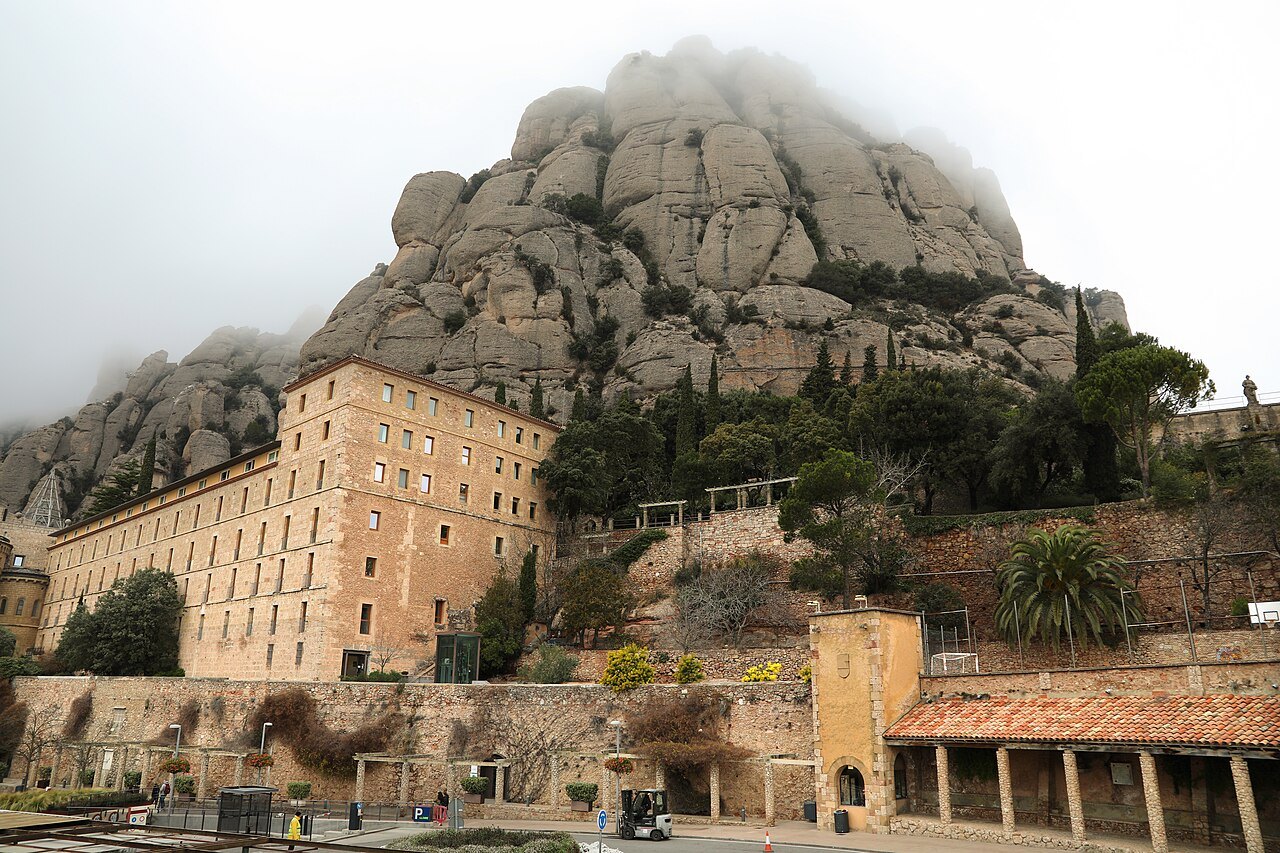
- 11Montserrat, Sitges, Girona, Tarragona and the Colònia GüellDay TripsThe mountain monastery, the seaside town, the medieval city on the Onyar, Roman Tarragona and Gaudí's crypt outside the city — each a train or a coach away.
- 12Questions answered at lengthThe JournalVisitor questions about Barcelona, answered in full, with new pieces as they are written.
All twenty sights
Grouped by what they are: Gaudí and the Modernistes first, then the old city, the hills, the sea, and the park and the tower.
Gaudí and the Modernistes
Eight buildings of Catalan Modernisme, six of them by Gaudí
- 1
 The Sagrada FamíliaGaudí's basilica, begun on 19 March 1882 and consecrated by Pope Benedict XVI on 7 November 2010; its central Tower of Jesus Christ reached 566 feet on 20 February 2026, making it the tallest church in the world.Eixample
- 2
 Park GüellA garden city of terraces and mosaics that Eusebi Güell commissioned from Gaudí, built between 1900 and 1914 and opened to the public in 1926.Gràcia · Turó del Carmel
- 3
 Casa BatllóA house redesigned by Gaudí in 1904, with a façade decorated in trencadís, a mosaic of broken ceramic tiles, on the Illa de la Discòrdia.Eixample · Passeig de Gràcia
- 4
 Casa Milà (La Pedrera)The last private residence Gaudí designed, built between 1906 and 1912 and nicknamed La Pedrera, the stone quarry, for its rough-hewn stone façade.Eixample · Passeig de Gràcia
- 5
 Palau GüellThe mansion Gaudí designed for Eusebi Güell and built between 1886 and 1888, entered through iron gates with a parabolic arch.El Raval
- 6
 Casa VicensGaudí's first major project, built between 1883 and 1885 in the then independent town of Gràcia, in an orientalist style close to Neo-Mudéjar.Gràcia
- 7
 The Palau de la Música CatalanaA concert hall by Lluís Domènech i Montaner, built between 1905 and 1908 for the choral society Orfeó Català and inaugurated on 9 February 1908.Sant Pere · Ciutat Vella
- 8
 The Hospital de Sant PauThe largest complex built in Art Nouveau style, by Domènech i Montaner between 1901 and 1930; a working hospital until June 2009, reopened as a museum and cultural center in 2014.El Guinardó
The old city
A Roman camp, a Gothic cathedral and the street that runs to the sea
- 9
 Barcelona CathedralThe cathedral of the Holy Cross and Saint Eulalia, built from the thirteenth to the fifteenth centuries, with a cloister finished in 1448 that encloses the Well of the Geese.Gothic Quarter
- 10
 The Gothic QuarterThe historic center of the old city, from La Rambla to Via Laietana, with a stretch of Roman wall; much of what you see dates to the nineteenth and early twentieth centuries.Ciutat Vella
- 11
 Santa Maria del MarA church of Catalan Gothic built between 1329 and 1383 by the people of the Ribera quarter, remarkable for the purity and unity of its style.La Ribera · Ciutat Vella
- 12
 La RamblaA tree-lined pedestrian street three-quarters of a mile long, from the Plaça de Catalunya to the Columbus Monument, between the Gothic Quarter and El Raval.Ciutat Vella
- 13
 La BoqueriaA large public market with an entrance from La Rambla; the first mention of a market here dates from 1217.Ciutat Vella · La Rambla
The hills
Montjuïc, a pavilion of 1929 and the summit of Tibidabo
- 14
 MontjuïcA hill between the sea and the Llobregat, site of the 1929 International Exposition and of venues for the 1992 Olympics, with a castle that dates to the seventeenth century.Sants-Montjuïc
- 15
 The Barcelona PavilionMies van der Rohe and Lilly Reich's German Pavilion for the 1929 International Exposition, demolished in 1930 and reconstructed in 1986.Montjuïc
- 16
 TibidaboThe tallest hill of the Serra de Collserola at 512 meters, crowned by the Sagrat Cor church, which Enric Sagnier began in 1902, and an amusement park.Collserola
The sea
The beach quarter and the old harbor
- 17
 La BarcelonetaA neighborhood of narrow streets built in the eighteenth century for residents displaced by the construction of the Ciutadella, beside the city's sandy beaches.Ciutat Vella · seafront
- 18
 Port Vell and the Columbus MonumentThe old harbor, rebuilt before the 1992 Olympics, joined to La Rambla by the Rambla de Mar and marked by the Columbus Monument raised for the 1888 exposition.Ciutat Vella · waterfront
The park and the tower
A citadel turned park, and a skyscraper at the gateway of Poblenou
- 19
 The Parc de la Ciutadella and the Arc de TriomfA park of 77 acres that was for decades the city's only green space, home to the Parliament of Catalonia and the triumphal arch that was the gateway of the 1888 exposition.Ciutat Vella · La Ribera
- 20
 Torre GlòriesA 38-story tower by Jean Nouvel, opened in 2005, formerly known as Torre Agbar, at the gateway of the Poblenou technology district.Sant Martí · Poblenou